
My First Kitchen Disaster
I tried making Beef Wellington for my husband’s birthday. It was a long time ago. I was so nervous. I forgot to chill the meat properly. The pastry got soggy. It was a big, brown mess on the plate. We still ate it with a laugh.
Why does this matter? Chilling each layer is the secret. It keeps the pastry crisp. It makes the whole thing hold its shape. It turns a scary recipe into something you can manage. Have you ever had a kitchen disaster that turned out okay?
The Story in Your Bowl
That rich red wine sauce is not just a sauce. It is a story. You brown the oxtails and vegetables for a long time. The smell fills your whole house. It smells like a fancy restaurant. It smells like love and patience.
Simmering it for hours pulls all the good flavors out. This matters because good food takes time. The waiting is part of the gift you give to others. Fun fact: The word “duxelles” for the mushroom mix comes from a 17th-century French marquis!
Building a Flavor Blanket
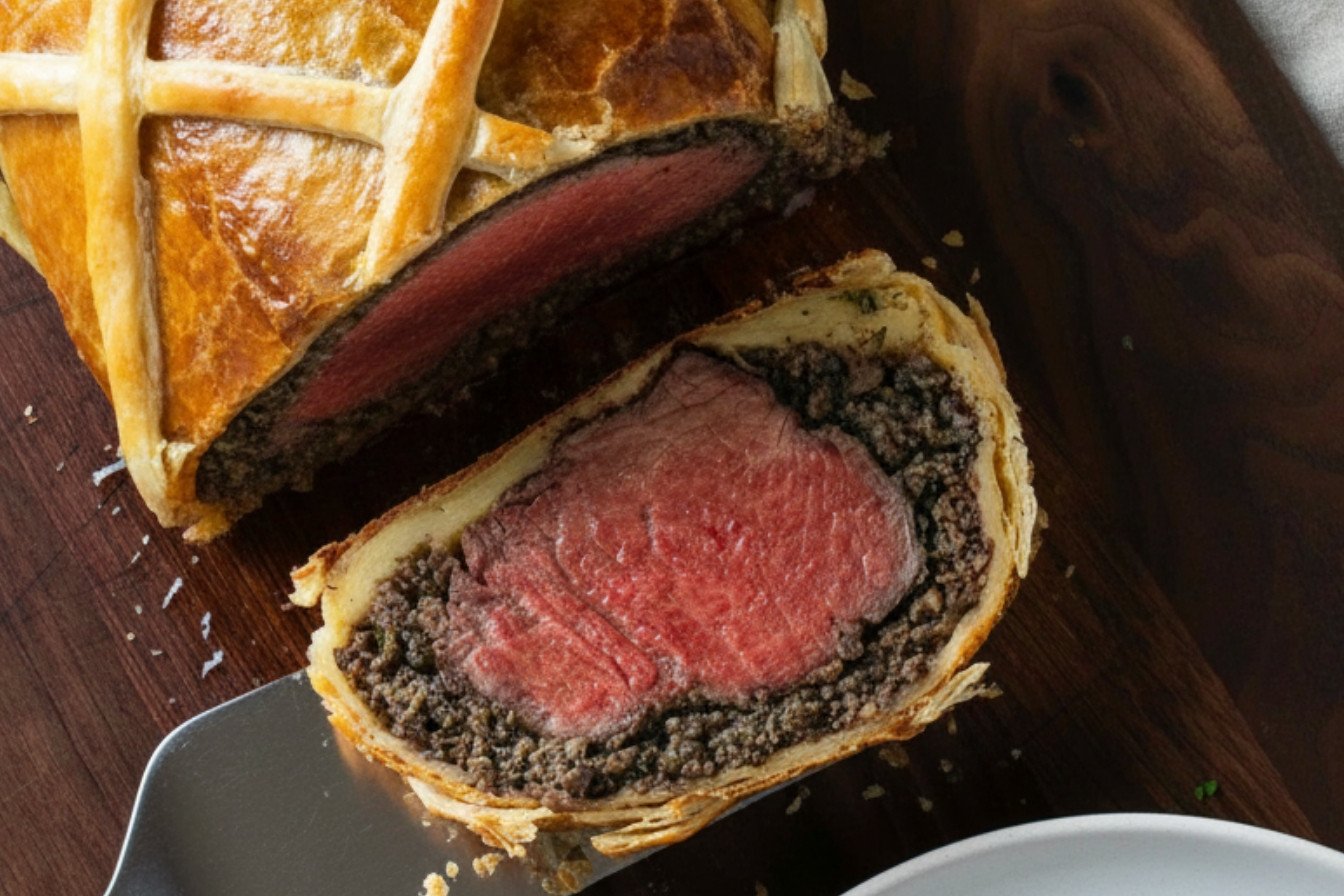
Think of the Wellington like a cozy blanket. The beef is seared first for a tasty crust. Then it gets a soft layer of pâté. Next comes the duxelles, those finely chopped mushrooms. They are like a savory, earthy hug for the meat.
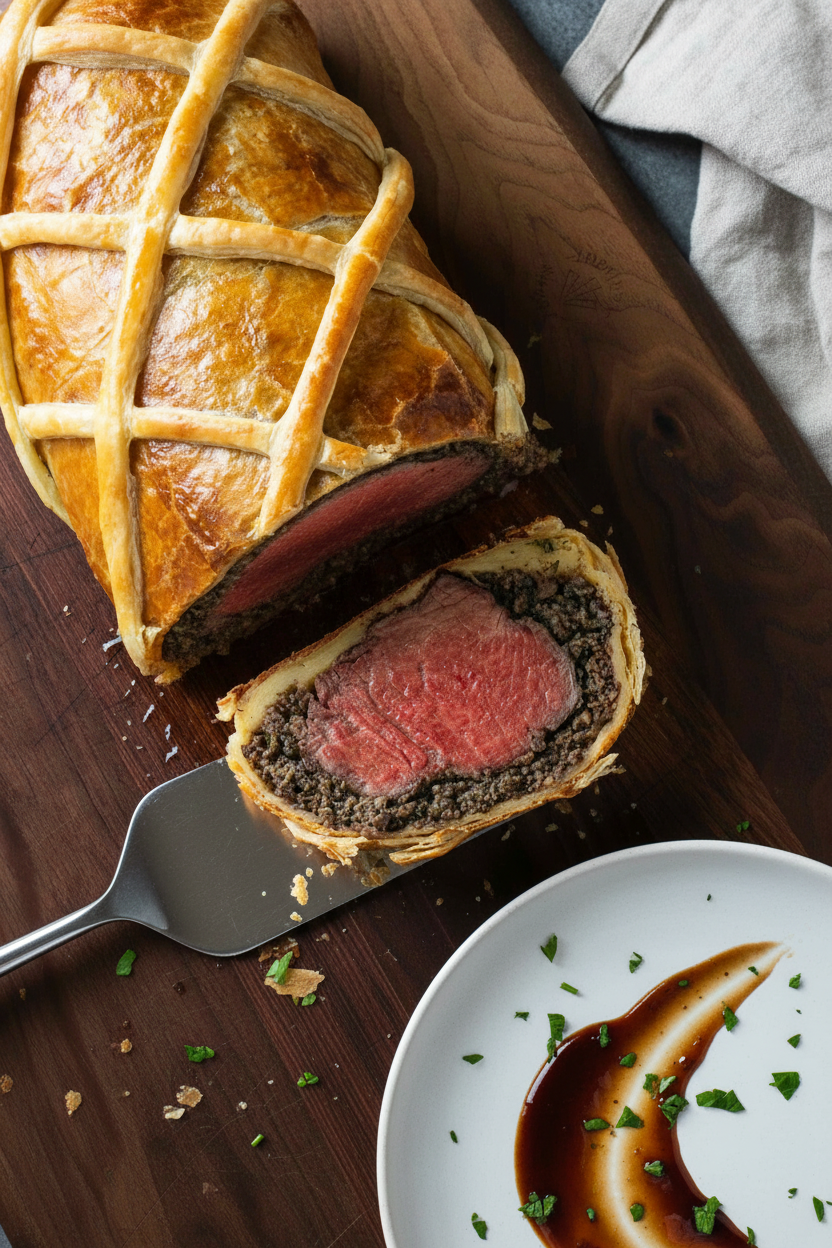
The puff pastry is the final, golden wrap. Each layer has a job. Each one protects the one inside it. When you slice it, you see all those beautiful rings. Doesn’t that look amazing? What’s your favorite “layer cake” savory dish?
Why All the Waiting?
The recipe tells you to chill things many times. Chill the beef. Chill the duxelles. Chill the wrapped Wellington. This seems fussy. But it is the most important step.
A cold, firm filling is easier to wrap. It helps the pastry stay crisp in the hot oven. This matters because patience in cooking gives you a better result. It is a quiet lesson. Good things come to those who wait. Do you think you could wait two days to make this?
The Magic of the Last Step
My favorite part is adding the cold butter to the sauce. You do this at the very end. You take the pot off the heat. You whisk in little pieces of cold butter. The sauce turns silky and shiny.
This step is called “mounting” the sauce. The butter makes it rich and smooth. It brings all the flavors together. I still smile when I see that glossy finish. It means you are done. It is time to eat and share your masterpiece.
Ingredients:
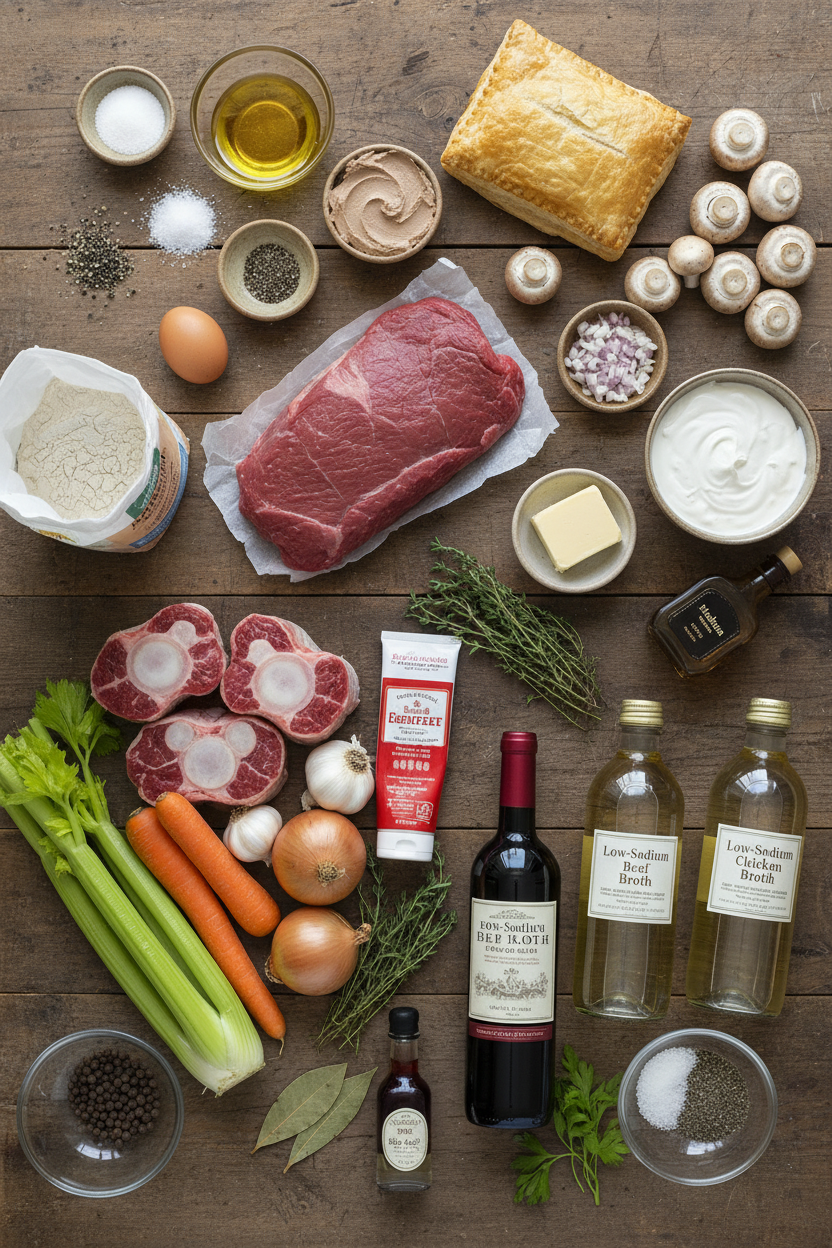
| Ingredient | Amount | Notes |
|---|---|---|
| Beef tenderloin (center-cut Châteaubriand) | 3-4 lbs (trimmed weight) | |
| Olive oil | 2 tablespoons | |
| Table salt | 2 teaspoons | For the beef |
| Ground black pepper | 2 teaspoons | For the beef |
| Fine pâté | 5 ounces | |
| Puff pastry | 1 pound | |
| Large egg | 1 | For egg wash |
| Button mushrooms | 1 pound | For the duxelles |
| Unsalted butter | 3 tablespoons | For the duxelles |
| Large shallots, minced | 2-3 (about ½ cup) | For the duxelles |
| Heavy cream | 2 tablespoons | For the duxelles |
| Madeira | 1 teaspoon | For the duxelles, optional |
| Fresh thyme leaves, minced | 1 tablespoon | For the duxelles |
| Beef oxtails | 2 ½ pounds | For the red wine sauce |
| Red wine | 1 bottle (750ml) | For the red wine sauce |
| Large shallots, minced | 4-6 (about 1 cup) | For the red wine sauce |
| Low-sodium beef broth | 1 can (14.5 oz) | For the red wine sauce |
| Low-sodium chicken broth | 1 can (14.5 oz) | For the red wine sauce |
| Ruby port | ¼ cup | For the red wine sauce |
| Unsalted butter, cold | 4 tablespoons | For the red wine sauce |
| Carrots, chopped | 2 medium | For the red wine sauce |
| Celery ribs, chopped | 2 medium | For the red wine sauce |
| Onions, chopped coarse | 4 small | For the red wine sauce |
| Garlic head, cloves separated | 1 large | For the red wine sauce, unpeeled |
| Tomato paste | 2 teaspoons | For the red wine sauce |
| Bay leaf | 1 | For the red wine sauce |
| Fresh thyme sprigs | 10 | For the red wine sauce |
| Whole black peppercorns | 1 teaspoon | For the red wine sauce |
| Parsley stems | 6 | For the red wine sauce |
| Unbleached all-purpose flour | As needed | For dusting |
| Salt and ground black pepper | To taste | For finishing the sauce |
Instructions
Step 1: First, let your beef relax in the fridge. Place it uncovered on a rack for two days. This dries the surface for a perfect sear. It feels like a long wait, but it’s worth it. (A wire rack keeps air flowing all around the meat.)
Step 2: Now, get your pan very hot. Rub the beef with oil, salt, and pepper. Sear it quickly until every side is a deep, rich brown. This locks in all the wonderful juices. Doesn’t that smell amazing already?
Step 3: Wrap the seared beef tightly in plastic. Let it chill in the fridge again. This can be for 4 hours or even overnight. Patience is a secret ingredient in cooking. What’s your favorite dish that’s worth the wait? Share below!
Step 4: Make your duxelles. Chop mushrooms very fine in a food processor. Cook them with shallots in butter until all the moisture disappears. Stir in a little cream and thyme at the end. (Squeeze the mixture in a towel if it looks too wet.)
Step 5: Spread that mushroom mix on parchment. Chill it into a flat sheet. Remove the twine from your cold beef. Spread the pâté over the meat like you’re frosting a cake. I still laugh at that thought.
Step 6: Roll your pastry on a floured surface. Place the cold mushroom sheet on the pastry. Set the beef on top, pâté-side down. Brush the edges with egg wash and wrap it all up snugly. Chill this bundle for 30 minutes.
Step 7: Bake your Wellington on the lowest oven rack. After 15 minutes, you can add pretty pastry strips. Bake until golden and the inside is just right for you. Let it rest before slicing. This rest keeps everything juicy.
Step 8: For the sauce, roast oxtails and veggies until they’re beautifully brown. Simmer wine with herbs until it reduces. Combine everything in a big pot and let it bubble for hours. The long simmer makes the flavor deep and rich.
Step 9: Strain the sauce and chill it to remove the fat. When your Wellington is baking, simmer the sauce again. Whisk in cold butter at the very end. This makes it glossy and luxurious. Pour it into a pretty jug for the table.
Creative Twists
This recipe is a classic, but don’t be afraid to play. My grandson once suggested a twist that worked beautifully. Little changes can make it your own. Here are a few fun ideas to spark your imagination in the kitchen.
Try a layer of very thin prosciutto under the mushrooms. It adds a lovely salty flavor.
Use a mix of wild mushrooms like cremini and shiitake. Their earthiness is wonderful.
Make mini Wellingtons for a party using fillet steaks. Everyone gets their own parcel. Which one would you try first? Comment below!
Serving & Pairing Ideas
This dish is a celebration all by itself. I like to keep the sides simple and elegant. Some buttery mashed potatoes or roasted asparagus are perfect. They don’t fight for attention on the plate. A simple green salad with a sharp vinaigrette is nice too.
For a drink, a glass of bold red wine like Cabernet Sauvignon pairs beautifully. For a non-alcoholic option, try a sparkling grape juice with a twist of orange. It feels just as special. Which would you choose tonight?
Storing Your Wellington Work of Art
This dish is a special project. You want it to stay perfect. Let it cool completely after baking. Then wrap it tightly in plastic wrap. You can keep it in the fridge for one day.
I do not recommend freezing the fully assembled Wellington. The pastry can get soggy. My first time, I froze a slice as an experiment. It was a sad, soft mess the next week!
You can batch-cook parts ahead, though. Make the duxelles and sauce days before. This matters because it breaks the big job into small, easy steps. Your cooking day will feel calm and fun.
To reheat, place slices on a rack in a 350°F oven for 10 minutes. This keeps the pastry crisp. Have you ever tried storing it this way? Share below!
Three Common Hiccups and How to Fix Them
First, a soggy bottom. This happens if the duxelles are too wet. Cook them until they are very dry, like paste. I remember when mine were too damp. The pastry steamed instead of baking.
Second, the pastry cracks when wrapping. Your meat must be very cold. A warm tenderloin melts the butter in the dough. Chilling everything helps the pastry stretch nicely.
Third, the meat is overcooked. Use a meat thermometer. Trust it, not just the clock. This matters for flavor and texture. Perfectly cooked meat is tender and juicy. It makes all your effort worth it.
Fixing these builds your kitchen confidence. You learn why each step is important. Which of these problems have you run into before?
Your Quick Questions, Answered
Q: Can I make this gluten-free?
A: Yes! Use a gluten-free puff pastry. Dust your surface with gluten-free flour.
Q: What can I make ahead?
A: The duxelles and sauce can be made 3 days ahead. Keep them chilled in your fridge.
Q: I don’t have pâté. What can I use?
A: Dijon mustard works well. Just spread a thin, even layer on the cold meat.
Q: Can I make a smaller one?
A: Absolutely. Use a smaller tenderloin. Just adjust your pastry size to wrap it snugly.
Q: Is the sauce optional?
A: The Wellington is great without it. But the sauce is a lovely, rich bonus. *Fun fact: The long cook time for the sauce makes it taste like a cozy French bistro.* Which tip will you try first?
From My Kitchen to Yours
I hope you feel ready to try this classic dish. It is a celebration meal. Share it with people you love at your table.
Remember, cooking is about the joy of making something. Do not worry about perfect. Your effort is the most special ingredient.
I would love to hear about your cooking adventure. Have you tried this recipe? Tell me all about it in the comments below.
Happy cooking!
—Fiona Brooks.
The Ultimate Beef Wellington Recipe
Description
A classic and impressive centerpiece featuring a perfectly cooked beef tenderloin wrapped in duxelles, pâté, and flaky puff pastry, served with a rich red wine sauce.
Ingredients
Duxelles:
Red Wine Sauce:
Instructions
- For the Beef: Refrigerate the uncovered roast on a wire rack set over a baking sheet for two full days.
- Heat a large, heavy skillet over high heat. Coat the tenderloin with oil, salt, and pepper. Sear it in the hot pan until all sides are deeply browned, about 1 minute per side.
- Wrap the seared tenderloin tightly in plastic wrap and refrigerate for at least 4 hours or up to a day.
- Remove the twine and spread the mashed pâté evenly over the top and sides of the chilled meat.
- On a floured surface, roll the puff pastry into a 12×15-inch rectangle. Trim it to a 10×15-inch rectangle and chill the trimmings.
- Prepare a baking sheet with parchment and cooking spray. Make an egg wash by beating the egg with water.
- Unmold the chilled duxelles onto the pastry, removing the parchment. Place the tenderloin (pâté-side down) on the duxelles. Brush the pastry edges with egg wash, then wrap the dough tightly around the meat to encase it. Place seam-side down on the baking sheet, brush with egg wash, and refrigerate for 30 minutes.
- Bake at 450°F on the lowest rack. After 15 minutes, when lightly golden, add decorative pastry strips if desired. Continue baking until the pastry is deep golden and the internal temperature reaches 113-115°F for rare or about 120°F for medium-rare. Let rest 10 minutes before slicing and serving with sauce.
- For the Duxelles: Pulse the mushrooms in a food processor in batches until finely chopped, but not pasty.
- Cook minced shallots in butter until soft. Add the mushrooms, increase the heat, and cook until the released liquid evaporates. Stir in cream, optional Madeira, salt, and pepper, and cook until dry. Finish by stirring in thyme off the heat.
- Spread the mixture into an 8×10-inch rectangle on a parchment-lined sheet. Cover directly with plastic wrap and chill until completely cold, at least 2 hours.
- For the Red Wine Sauce: Roast oxtails and vegetables in a 450°F oven until well-browned, stirring occasionally and adding tomato paste halfway through.
- Simultaneously, simmer wine, shallots, bay leaf, and thyme until reduced to about 1 ½ cups.
- Deglaze the roasting pan with beef and chicken broth over high heat, scraping up the browned bits.
- Combine the deglazed contents, wine reduction, water, peppercorns, and parsley stems in a large pot. Simmer for 3-4 hours. Strain the broth, cool, and refrigerate until the fat solidifies.
- While the Wellington bakes, skim the fat from the chilled stock. Simmer the stock until reduced to about 1 cup, then add the port and set aside.
- While the Wellington rests, return the sauce to a simmer and whisk in the cold butter, one piece at a time. Season with salt and pepper to finish.
Notes
- This is a multi-day project. Plan accordingly. For best results, ensure all components (beef, duxelles, sauce base) are thoroughly chilled before assembly to keep the pastry flaky. Use a reliable meat thermometer to achieve your desired doneness.






Leave a Reply