
My First Duck Disaster
I tried cooking duck for my husband years ago. I didn’t dry the skin. Oh my. It steamed in its own fat. The skin was soft and chewy. He smiled and ate it anyway. I still laugh at that.
That taught me a big lesson. Dry skin is the secret to crisp skin. It matters because that crisp texture makes the meal feel special. It’s worth the extra step.
Why We Chill the Duck
You might wonder why we chill it for so long. It’s not just to wait. The cold, dry air of your fridge dries the skin even more. This helps all that lovely fat melt out later.
Think of it like letting a good story simmer in your mind. The waiting makes the ending better. So, plan a little ahead. Your patience will be rewarded with perfect crackling skin.
The Magic of the Sauce
While the duck chills, make the glaze. Port wine and figs bubble together. Doesn’t that smell amazing? It’s sweet, tangy, and rich. It fills your kitchen with a warm, fruity smell.
Fun fact: Port is a wine from Portugal. It’s often a bit sweeter than regular red wine. The sauce matters because it cuts through the rich duck. It’s like a sweet hug for your taste buds. Do you prefer sweet or savory sauces with your meat?
The Sizzle in the Pan
Now, the fun part. Start with a cold pan, skin-side down. Trust me on this. As it heats, the fat will slowly melt out. You’ll hear a gentle sizzle. Watch the skin turn golden and crisp. It takes time, about 20 minutes.
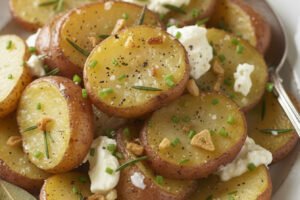
Don’t rush it. Good things take time. This slow render is why the skin gets so crisp. It also gives you lots of delicious duck fat to save. You can use it to roast potatoes later!
The Most Important Step
After cooking, you must let the duck rest. Put it on a rack and cover it loosely. Walk away for ten minutes. I know it’s hard to wait!
This matters so much. Resting lets the juices settle back into the meat. If you cut it right away, all those good juices run out onto the plate. Your duck will be dry. What’s the hardest part of a recipe for you to wait through?
Bringing It All Together
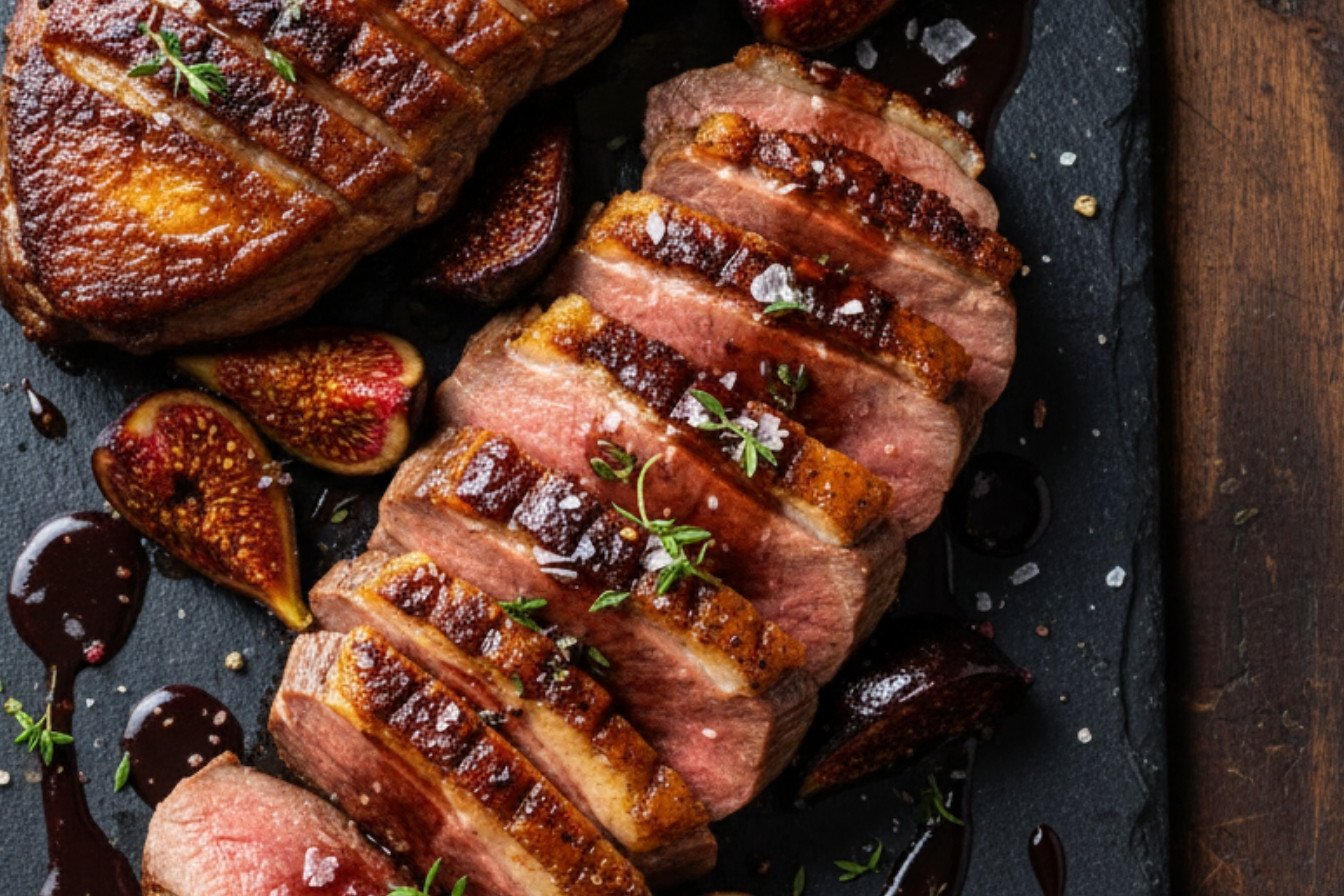
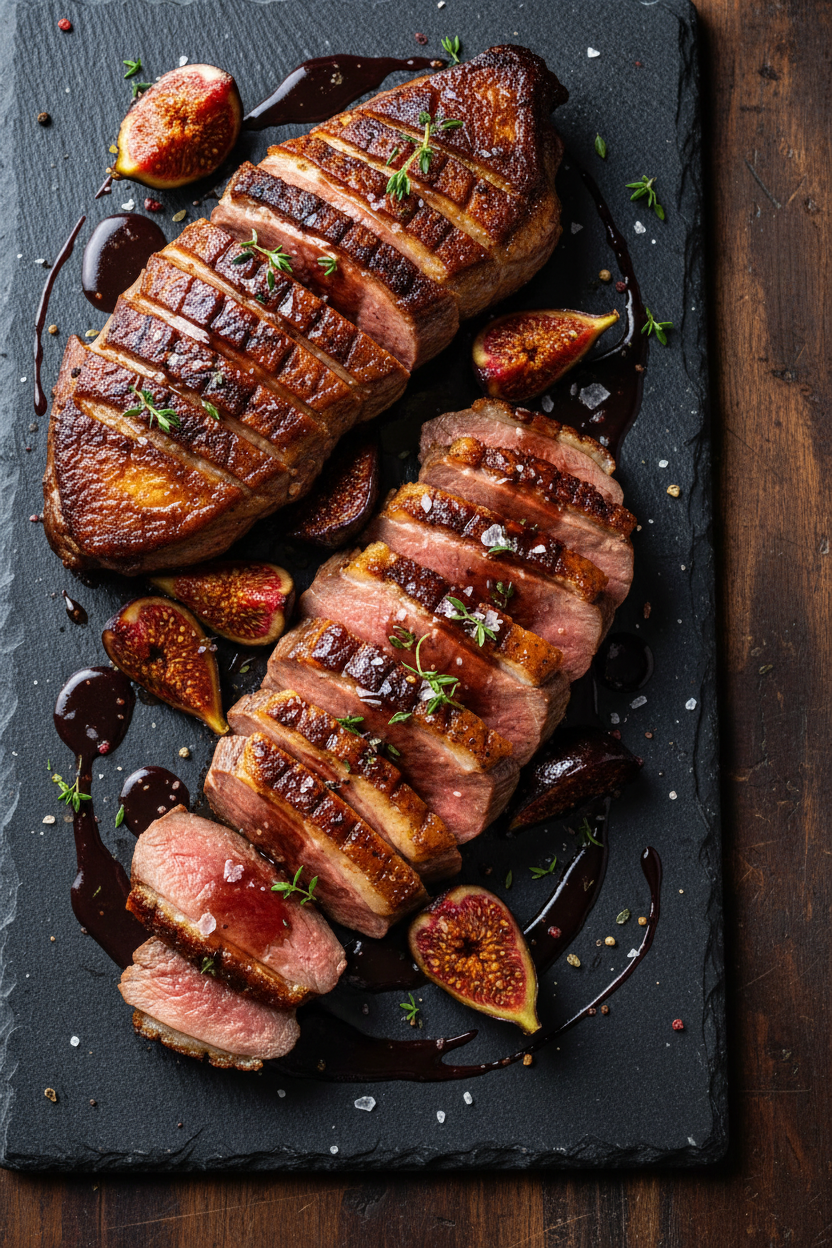
Slice the duck thin. Fan it out on a plate. Drizzle that beautiful fig port glaze over the top. The deep pink meat, the dark sauce, the crisp skin. It’s a feast for the eyes first.
This meal feels fancy. But it’s really about simple steps done with care. Share it with someone you love. Tell me, who would you make this special dinner for?
Ingredients:
| Ingredient | Amount | Notes |
|---|---|---|
| Boneless duck breasts | 4 (7- to 8-ounce) | |
| Kosher salt | 2 teaspoons | |
| Pepper | 1½ teaspoons | |
| Ruby port | ½ cup | |
| Dried Black Mission figs | ¼ cup | Halved through stem |
| Red wine vinegar | ¼ cup | |
| Sugar | 3 tablespoons |
Instructions
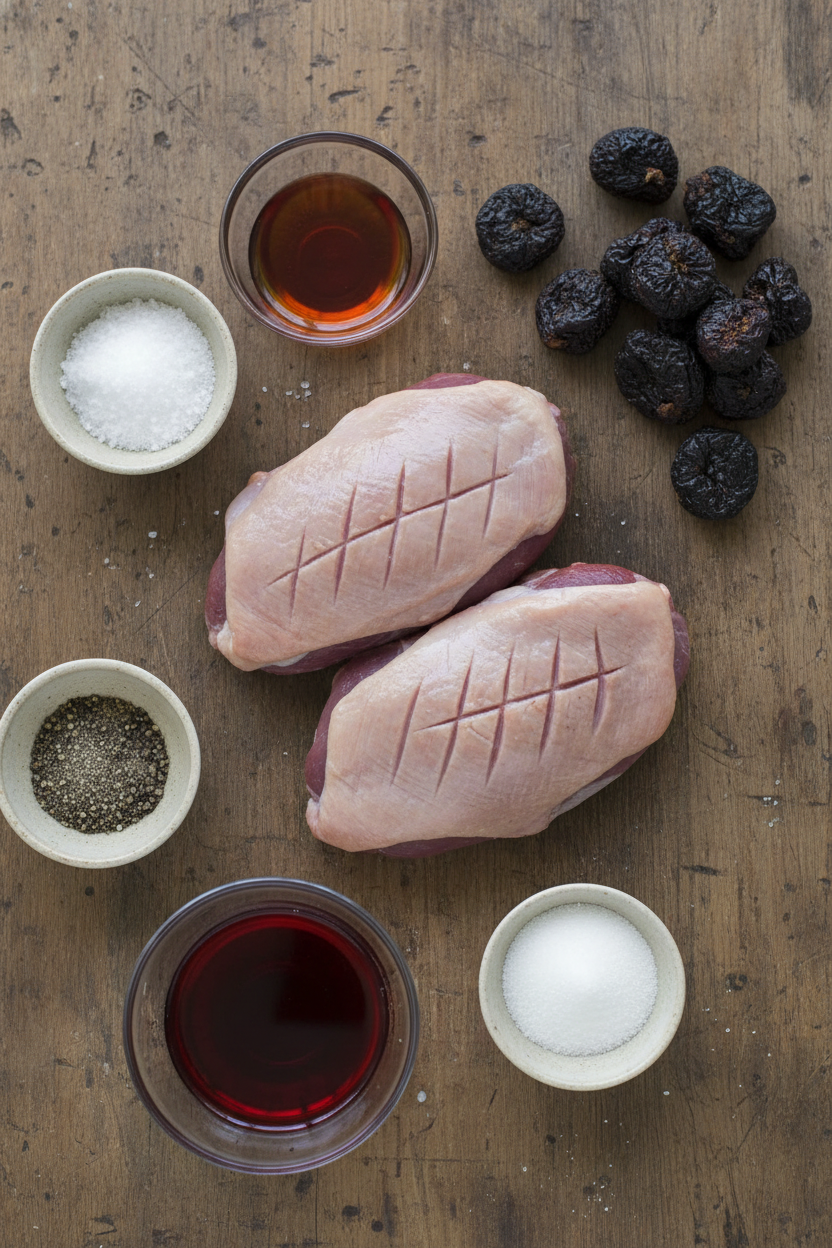
Step 1: First, pat your duck breasts very dry. Lay them skin-side down. Trim any extra fat from the edges. This helps them cook evenly. (A dry breast gives you the crispiest skin, my dear.)
Step 2: Now, flip them over. Gently score the fat in a little criss-cross pattern. Don’t cut into the meat. Season everything well with salt and pepper. Pop them in the fridge, skin-side up. Let them rest there for hours. This dries the skin even more.
Step 3: Time for the sweet sauce! Mix the port, figs, vinegar, and sugar in a pot. Let it bubble gently until it gets syrupy. It will smell like a fancy holiday. Let it cool and thicken. What’s your favorite sweet-and-sour food? Share below!
Step 4: Place the duck skin-side down in a cold pan. Turn the heat to medium. Let the fat slowly melt out. Be patient for 17-20 minutes. You’ll get the most beautiful, crispy, golden skin. I still laugh at how I used to rush this.
Step 5: Carefully flip the breasts. Lower the heat a bit. Cook the other side to your liking. I prefer mine a little pink inside. Then move them to a rack to rest. Cover them loosely with foil. (Letting it rest keeps all the juices inside.)
Step 6: After 10 minutes, slice the duck thinly. Arrange it on a warm plate. Drizzle that gorgeous fig sauce all over. Doesn’t that look amazing? Serve it right away while everyone is gathered.
Creative Twists
This dish is wonderful as-is. But you can play with it, too! Try using apricots or cherries instead of figs. A little orange zest in the sauce is lovely. For a savory kick, add a pinch of black pepper to the glaze. Which one would you try first? Comment below!
Serving & Pairing Ideas
This duck feels like a celebration. I love it with simple, buttery mashed potatoes. Some roasted carrots or green beans are perfect, too. For a drink, a glass of the same ruby port is nice. For a cozy night, try sparkling apple cider. Its bubbles cut through the rich sauce. Which would you choose tonight?
Keeping Your Duck Delicious
Let’s talk about keeping your lovely duck. First, store any leftovers in the fridge. Use a sealed container for up to three days. You can freeze the cooked, sliced duck too. Wrap it tightly for a month. I once froze some for my grandson’s surprise visit. It was a lifesaver!
Reheating is simple. Use a skillet on low heat. Add a splash of water to keep it moist. You can also make the sauce ahead. It keeps in the fridge for a week. Batch cooking the sauce saves you time later. This matters because good food should be enjoyed, not rushed.
Have you ever tried storing it this way? Share below!
Simple Fixes for Common Hiccups
We all face little problems in the kitchen. Here are three easy fixes. First, if the skin isn’t crispy, you didn’t dry it enough. Pat it thoroughly with paper towels. I remember when I skipped this step. The skin was soggy, not snappy.
Second, if the sauce is too thin, just simmer it longer. Let it reduce until it coats your spoon. Third, if the duck is tough, you probably didn’t let it rest. Resting lets the juices settle back in. This matters for tender, juicy meat every time. Fixing small issues builds your cooking confidence.
Which of these problems have you run into before?
Your Quick Questions, Answered
Q: Is this recipe gluten-free? A: Yes, all the ingredients listed are naturally gluten-free.
Q: Can I make any parts ahead? A: Absolutely. The sauce and the scored, seasoned duck can be made a day early.
Q: I don’t have port or figs. What can I use? A: Use a sweet red wine or cherry juice. Prunes or dried apricots work for figs.
Q: Can I cook just two breasts? A: Yes. Just make half the amount of sauce in a smaller pot.
Q: Any optional tips? A: A pinch of orange zest in the sauce is lovely. Fun fact: Ducks have a special gland that helps keep their feathers dry!
Which tip will you try first?
From My Kitchen to Yours
I hope you feel ready to try this special meal. Cooking is about sharing stories and good food. My kitchen is always open for your questions. I love hearing about your own cooking adventures. Please tell me all about them in the comments below.
Have you tried this recipe? I would be so pleased to hear how it turned out for you. Happy cooking!
—Fiona Brooks.
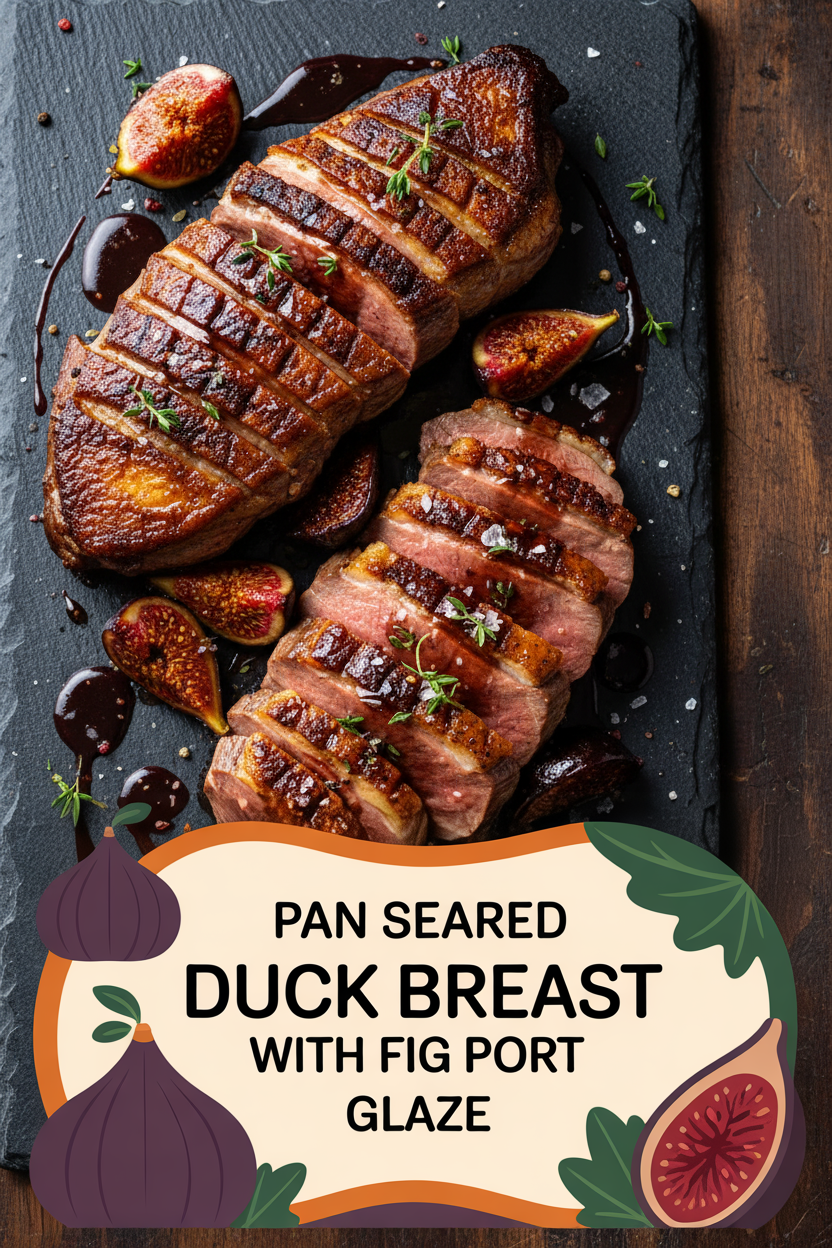
Pan Seared Duck Breast with Fig Port Glaze
Description
A sophisticated dish featuring perfectly seared, crispy-skinned duck breast complemented by a rich, sweet-tart fig and port wine reduction.
Ingredients
Instructions
- Use paper towels to thoroughly dry the duck breasts. Lay them skin-side down. Trim any excess fat from the edges and remove the silverskin from the meat.
- Turn the breasts over. Score the fat in a ½-inch crosshatch pattern, avoiding the meat. Season generously on all sides with salt and pepper. Place skin-side up on a plate, cover with plastic wrap, and chill for 6 to 24 hours.
- While the duck chills, mix all sauce ingredients in a saucepan. Bring to a boil over medium heat and simmer until reduced by half, approximately 15 minutes. Remove from heat; it will thicken into a syrup as it cools. (The sauce can be made ahead and stored.)
- Place the duck breasts skin-side down in a cold, nonstick skillet. Cook over medium heat until the fat renders and the skin is deep golden and crisp, 17 to 20 minutes.
- Flip the breasts skin-side up and lower the heat to medium-low. Cook to your desired doneness: 1-2 minutes for medium-rare (125-130°F), 3-4 minutes for medium (130-135°F), 4-5 minutes for medium-well (135-140°F), or 7-8 minutes for well-done (145-150°F).
- Move the duck to a wire rack set over a baking sheet. Loosely cover with foil and allow to rest for 10 minutes.
- Slice the rested breasts ¼ inch thick and serve with the prepared sauce.
Notes
- For best results, ensure the duck skin is completely dry before scoring and starting in a cold pan. The sauce can be gently reheated if it becomes too thick. Save the rendered duck fat for roasting potatoes or vegetables.





Leave a Reply